

How to test the performance of a new Titling Jacket Kettle?
Jul 02, 2026
As a supplier of Titling Jacket Kettles, I understand the importance of ensuring that our products meet the highest performance standards. Testing the performance of a new Titling Jacket Kettle is a crucial step in the quality control process, as it allows us to identify any potential issues and make necessary adjustments before the kettle is delivered to our customers. In this blog post, I will share some of the key steps and considerations for testing the performance of a new Titling Jacket Kettle.
Pre - test Preparation
Before conducting any performance tests, it is essential to ensure that the Titling Jacket Kettle is properly installed and set up. This includes checking the connections for the heating medium (such as steam or hot water), the cooling system, and the electrical components. The kettle should be placed on a stable surface, and all safety features, such as pressure relief valves and temperature sensors, should be in working order.
We also need to gather the necessary testing equipment. This typically includes thermometers, pressure gauges, flow meters, and timers. These tools will help us measure various parameters during the testing process, such as temperature, pressure, and flow rate.
Heating Performance Test
One of the most important aspects of a Titling Jacket Kettle is its heating performance. To test this, we first fill the kettle with a known volume of water. The initial temperature of the water is recorded using a thermometer.
Next, we start the heating system. For steam - heated kettles, we open the steam valve to allow steam to enter the jacket. We monitor the pressure of the steam using a pressure gauge and adjust the valve to maintain a stable pressure. For hot - water - heated kettles, we turn on the hot - water circulation pump and set the desired temperature on the control panel.
We then record the time it takes for the water in the kettle to reach a specific temperature, such as 80°C or 100°C. This time is an important indicator of the heating efficiency of the kettle. A shorter heating time generally means better performance.
During the heating process, we also measure the temperature distribution inside the kettle. We do this by inserting multiple thermometers at different locations in the kettle. A uniform temperature distribution is desirable, as it ensures that the contents of the kettle are heated evenly.
Cooling Performance Test
In addition to heating, the cooling performance of the Titling Jacket Kettle is also crucial, especially for applications where rapid cooling is required. To test the cooling performance, we first heat the water in the kettle to a high temperature, such as 90°C.
Then, we start the cooling system. For water - cooled kettles, we open the cooling water valve to allow cold water to flow through the jacket. We monitor the flow rate of the cooling water using a flow meter and adjust the valve to maintain a stable flow.
We record the time it takes for the water in the kettle to cool down to a specific temperature, such as 30°C. A shorter cooling time indicates better cooling performance. Similar to the heating test, we also measure the temperature distribution during the cooling process to ensure even cooling.
Titling Function Test
The titling function of the Titling Jacket Kettle is another important feature. To test this, we first ensure that the kettle is empty and in a stable position.
We then activate the titling mechanism. This can be done either manually or through an automated control system, depending on the design of the kettle. We observe the movement of the kettle as it tilts and record the time it takes to reach the maximum tilt angle.

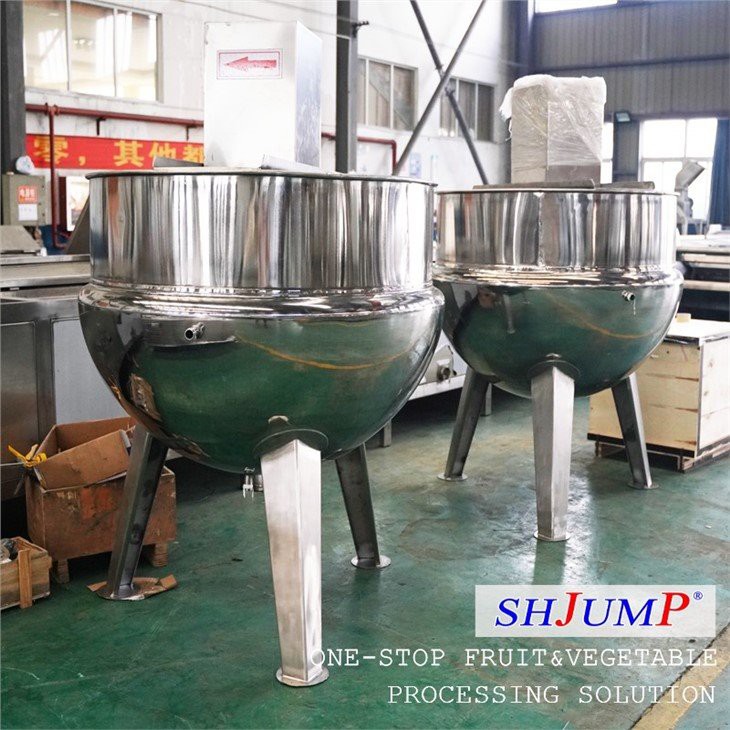
The tilt angle should be measured accurately to ensure that it meets the specifications. We also check for any smoothness in the titling movement. Any jerks or abnormal noises during the titling process may indicate a problem with the titling mechanism.
Leakage Test
A leakage test is essential to ensure the safety and efficiency of the Titling Jacket Kettle. We first pressurize the jacket of the kettle with the heating or cooling medium. For steam - heated kettles, we increase the steam pressure to a slightly higher level than the normal operating pressure.
We then carefully inspect the kettle for any signs of leakage. This includes checking the joints, gaskets, and valves. Any leakage can lead to a loss of the heating or cooling medium, as well as potential safety hazards. If a leakage is detected, we need to identify the source and repair it before further testing.
Comparison with Similar Products
To get a better understanding of the performance of our new Titling Jacket Kettle, we can compare it with similar products in the market. This can be done by looking at the technical specifications, such as heating and cooling rates, temperature control accuracy, and titling speed.
We can also gather feedback from customers who have used similar products. This feedback can provide valuable insights into the real - world performance of the products and help us identify areas where our Titling Jacket Kettle can be improved.
Continuous Monitoring and Improvement
Testing the performance of a new Titling Jacket Kettle is not a one - time event. We need to continuously monitor the performance of the kettle during its operation. This can be done by collecting data on various parameters, such as temperature, pressure, and flow rate, over a period of time.
Based on the data collected, we can identify any trends or patterns that may indicate potential issues. We can then make necessary adjustments to the kettle or its operating parameters to improve its performance.
Conclusion
Testing the performance of a new Titling Jacket Kettle is a comprehensive process that involves multiple steps and considerations. By conducting thorough tests, we can ensure that our products meet the highest quality standards and provide our customers with reliable and efficient equipment.
If you are interested in our Titling Jacket Kettle or other related products such as Falling Film Vacuum Evaporator and Forced Circulation Vacuum Evaporator, please feel free to contact us for more information and to discuss your specific requirements. We are committed to providing you with the best solutions for your fruit - processing needs.
References
- Smith, J. (2018). Handbook of Food Processing Equipment. Elsevier.
- Jones, A. (2019). Principles of Industrial Heating and Cooling. Wiley.