Enzymatic Hydrolysis Tank
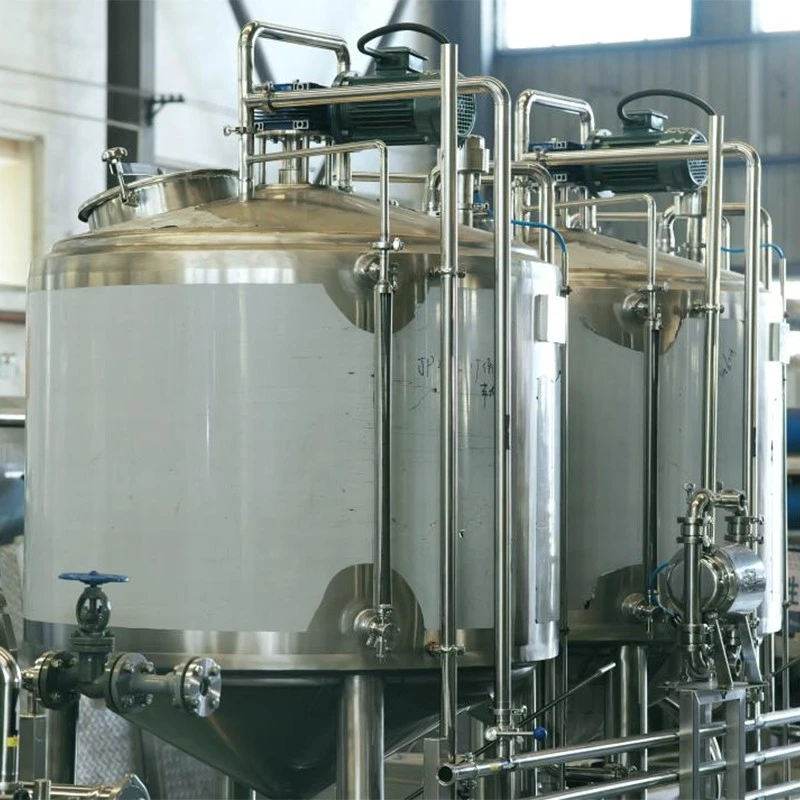
Food-grade enzymatic hydrolysis tank designed for fruit and vegetable processing lines. It breaks down pectin and starch to enhance juice yield and clarity. Features include a three-layer temperature-controlled jacket, an integrated mixing system, CIP (Clean-in-Place) capability, and real-time monitoring of temperature and pH. Constructed from SUS304 stainless steel, the unit supports PLC-based customization and helps reduce the filtration load for downstream processes.
- Fast Delievery
- Quality Assurance
- 24/7 Customer Service
Product Introduction
Shanghai Jump Machinery & Technology Co., Ltd. is one of the most reliable manufacturers and suppliers of enzymatic hydrolysis tank in China. Please feel free to buy advanced enzymatic hydrolysis tank made in China here from our factory. Quality products and reasonable price are available.
Introduction
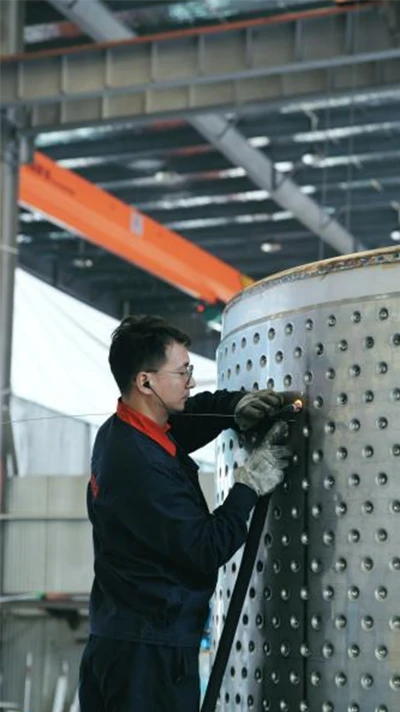
In fruit and vegetable processing lines, the ultimate profitability is often determined not by the initial pressing equipment, but by a piece of machinery in the middle-the enzymatic hydrolysis tank-which may appear the most "quiet."
Its primary function is to break down macromolecules such as pectin and starch, simultaneously boosting juice or pulp yield and enhancing product clarity. It serves a critical role: transforming large volumes of fruit pulp into high-value, clarified juice, while significantly reducing the burden on downstream filtration processes and improving overall economic efficiency.
These tanks are utilized across a wide range of sectors, from food and beverages to biotechnology and pharmaceuticals. Under optimal temperature and pH conditions, and with the aid of a continuous agitator, enzymes are able to fully exert their catalytic power-gradually breaking down the macromolecules within the fruit pulp into smaller molecules. The more thorough this reaction, the more efficient the subsequent processing stages become.
Five Core Advantages
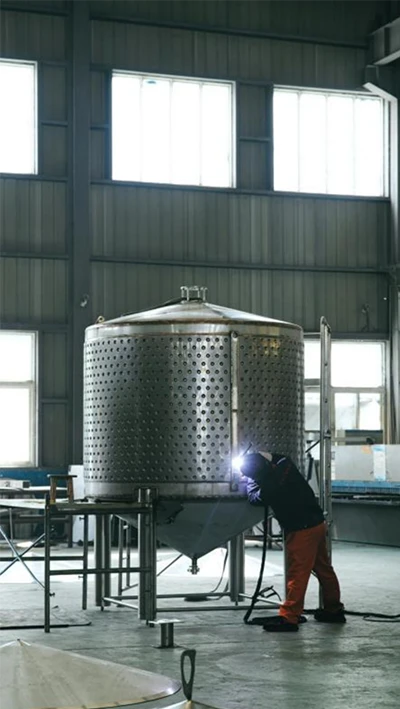
Stable & Accurate Temperature Control
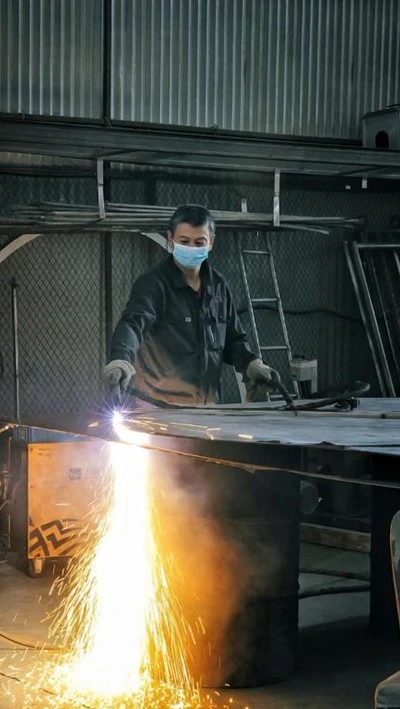
The tank features a three-layer insulation design: the interspace is filled with either rock wool or foamed polyurethane, while the exterior is encased in a polished, sleeve-style stainless steel shell. This configuration effectively maintains a constant temperature, provides thermal insulation, and saves energy, ensuring that the enzymatic hydrolysis reaction consistently operates within the optimal temperature range. The process allows for precise, stable control of both temperature and duration-for instance, a typical enzymatic hydrolysis protocol might involve a temperature of 55°C for 55 minutes-resulting in excellent reaction reproducibility.
Thorough Mixing for Uniform Reaction
Equipped with an internal helical or frame-type agitation system, the unit facilitates full contact and even blending between the raw materials and the enzyme solution, significantly enhancing the efficiency of the enzymatic hydrolysis process. The equipment integrates heating, cooling, thermal insulation, agitation, and automatic temperature control for enzymatic hydrolysis, allowing multiple processing stages to be completed within a single vessel. Taking the CXP-MJ5000 model as an example-which features a 5000L capacity and a helical agitator-the unit can share a common platform with a cooking tank.
High-Purity Food-Grade Materials
The vessel is constructed from food-grade SUS304 stainless steel, with a mirror-polished interior surface that prevents material from adhering to or remaining on the walls-ensuring compliance with rigorous food hygiene requirements and SOP validation protocols. Taking a 5000L, three-layer model as an example: it features a 3.0mm-thick inner wall, a 1.5mm-thick outer cladding, and a polyurethane foam insulation layer. The unit is fully equipped with components designed with hygiene in mind, including a quick-opening sanitary manhole, a sight glass with an integrated light, a thermometer, an air vent (breather), a CIP (Clean-in-Place) spray ball, inlet/outlet ports, a sampling port with a dedicated valve, a pH sensor port, an anti-vortex baffle, and a liquid level indicator-every detail is engineered to uphold the highest standards of hygiene.
Full-Coverage CIP Cleaning System
Equipped with a CIP (Clean-in-Place) spray ball, the system delivers rotating, omnidirectional coverage. This enables standardized cleaning procedures, ensuring that food hygiene requirements are met reliably-without having to rely on the subjective judgment of individual operators.
Real-Time Visible Process Monitoring
By integrating temperature sensors and pH meters, reaction parameters can be monitored in real time, providing a reliable basis for product stability. Additionally, a hydrostatic liquid level control system can be incorporated to automatically display and provide feedback on liquid levels, enabling precise, quantitative control over material intake and discharge.
Key Parameters
|
Parameter Item |
Configuration Description |
|
Tank Material |
Food-grade SUS304 stainless steel with mirror-finish polished inner wall |
|
Plate Thickness |
Standard inner plate thickness: 3.0 mm; three-layer version: inner wall 3.0 mm, outer jacket shell 1.5 mm |
|
Insulation Structure |
3-layer thermal insulation design. Interlayer filled with rock wool or polyurethane foam; fully enclosed sleeve-style polished stainless steel outer casing |
|
Agitation Type |
Spiral agitator or anchor agitator (selected based on production process) |
|
Temperature Control |
Jacket heating / cooling; automatic temperature regulation for enzymatic hydrolysis |
|
Typical Process |
Enzymatic hydrolysis at 55°C, holding duration: 55 min |
|
Reference Capacities |
Lab model starts at 200 L; available volumes: 2000 L, 3000 L, 5000 L, 8000 L and more |
|
Motor Brand |
Optional: Jiangsu Dazhong or equivalent domestic brands |
|
Control System |
Real-time temperature & pH monitoring; hydrostatic level sensing and centralized PLC control cabinet available as options |
|
Sanitary Fittings |
Quick-open sanitary manhole, sight glass with lamp, thermometer, breather valve, CIP spray ball, fluid inlet & outlet, sampling port (with sampling valve), pH port, anti-vortex baffle, level indicator |
Specifications for Representative Models
|
Model |
Volume / Specification |
Agitation Type |
Power |
Structural Features |
|
JP-MJG-1T/h |
φ1330 × 2000 |
Built-in spiral agitator |
2.2 kW |
Three-layer thermal insulation construction |
|
CXP-G-MJ3000 |
3000 L |
Anchor agitator |
3 kW |
SUS304, inner plate thickness: 3 mm |
|
CXP-MJ5000 |
5000 L |
Spiral agitator |
- |
Shares a common platform with cooking tanks |
Optional upgrades available for the enzymatic hydrolysis tank
Optional features include a hydrostatic level control system for precise, metered feeding and discharging; a pneumatic butterfly discharge valve for automated unloading and seamless integration with downstream piping; and a centralized PLC control cabinet to manage the temperature and timing of multiple units-shifting the operational model from "personnel monitoring equipment" to "system-managed processes."
FAQ
Q: What is the purpose of an enzymatic hydrolysis tank?
A: An enzymatic hydrolysis tank serves as the core reaction equipment for fruit and vegetable processing. It primarily breaks down macromolecules such as pectin and starch to improve juice yield, pulp yield and product clarity. As an essential intermediate unit that converts large volumes of fruit pulp into high-value clear juice, it greatly reduces the load on subsequent filtration steps and boosts economic benefits. Widely adopted in food, beverage, bioengineering and pharmaceutical industries, it uses enzymes as catalysts. With the agitator running, a complete enzymatic hydrolysis reaction takes place under suitable temperature and pH conditions. In typical processes such as juice clarification, pectinase and amylase decompose pectin and starch into soluble small-molecule substances to prevent sedimentation and cloudiness in fruit juice. It is also deployed on production lines to remove pectin from pumpkin and raise pulp output.
Q: How does the hydrolysis process work?
A: Taking juice clarification as an example, the full process proceeds as follows: prepasteurization at 98±2°C for 30 seconds deactivates native enzymes in apples and gelatinizes starch. The material is then rapidly cooled down to 50–53°C via a plate heat exchanger and piped into the enzymatic hydrolysis clarification tank for treatment with pectinase and amylase. After enzymatic hydrolysis, the juice passes through secondary filtration before being transferred to an ultrafiltration circulation tank. Enzymes are dosed once the liquid level in the tank reaches the agitator shaft. After the tank is fully filled, samples are taken after 70 minutes to test for residual pectin and starch. Upon completion of hydrolysis, secondary filtration (approximately 1.5 mm pore size) removes coarse pulp particles and impurities ahead of ultrafiltration. For pumpkin based feeds, the material is first cooled to 65°C through a tubular cooler before entering the hydrolysis tank.
Q: Which agitator suits materials of different viscosities?
A: Two main agitator types are available for enzymatic hydrolysis tanks: helical agitators and frame agitators, selected according to process requirements and material characteristics. For instance, the 5000 L enzymatic hydrolysis tank on pumpkin processing lines uses a helical agitator, while the 3000 L fermentation and hydrolysis tank is fitted with a frame agitator. No clear matching rules or selection tables for specific viscosity ranges are available in our reference materials. For this part, we recommend that our process engineers provide specifications based on actual viscosity measurements of the customer's feedstock; we avoid speculative recommendations.
Q: How do temperature and pH affect enzymatic hydrolysis?
A: Enzymatic hydrolysis must occur within suitable temperature and pH ranges to drive sufficient breakdown of macromolecules into smaller molecules. The enzymatic hydrolysis tank is engineered to precisely maintain the required reaction environment, fitted with temperature sensors and pH meters for real time parameter monitoring to guarantee consistent product quality. In practical operations, the typical setpoint for pumpkin processing is 55°C with a holding time of 55 minutes. For clear apple juice lines, hydrolysis runs at 50–53°C for 90 minutes; enzyme dosage, temperature and duration are adjusted according to apple quality. Process specifications also stipulate operation at 55°C, with ultrafiltration carried out at no more than 55°C. We do not have defined pH ranges from the available documentation. The exact pH value should be confirmed against the enzyme supplier's datasheet and internal process sheets.
Q: Which tank capacity fits my production line?
A: Our capacity recommendations draw from proven customer cases for reference. Lab or pilot lines commonly use 200 L tanks (e.g., the 150 kg/h experimental apple fermentation line). A 2000 L tank is typical for 3 t/h jujube and pumpkin lines, while 5000 L units are widely used on 3 t/h tomato, pumpkin and date lines. An 8000 L tank is deployed for the 0.8 t/h apple line, and 3000 L tanks are used for concentrated juice production. To calculate the exact tank volume and quantity, we ask customers to provide hourly throughput, required hydrolysis residence time (such as 55 or 90 minutes), and whether multiple tanks will run in rotation.
Q: How are tanks cleaned between production batches?
A: Enzymatic hydrolysis tanks are equipped with CIP spray balls that deliver rotating, all-directional spray for inline cleaning, meeting food hygiene standards and SOP validation requirements. Clean in Place (CIP) allows thorough cleaning of product contact surfaces with high temperature cleaning solutions of controlled concentration without dismantling or relocating equipment. Lines can be integrated with a semi automatic CIP system consisting of a CIP station, cleaning pipelines, multiple cleaning and return pumps, acid tanks, caustic tanks and hot water tanks. Optional functions include water inlet and drainage, alkali dosing, heating, concentration monitoring for acid and alkali solutions, liquid level measurement and automatic self cleaning. A PLC program controls the system, enabling adjustable cleaning duration, temperature, concentration and flow rate. Cleaning and return pumps are triggered or stopped in conjunction with tank level detection; pumps shut down automatically after a delay if invalid liquid level signals are detected. For reference, passivation typically uses 3–5% NaOH and 3–4% HNO, while routine cleaning uses 2–3% NaOH and 1.5–2% HNO. Actual concentrations should be validated on site.
Q: Can this equipment integrate with juice filtration systems?
A: Yes. Filtration follows immediately after enzymatic hydrolysis in the process flow. Hydrolyzed juice passes through secondary filtration (approx. 1.5 mm pore size, installed on the pipeline between the hydrolysis tank and ultrafiltration circulation tank) before entering ultrafiltration. The ultrafiltration membrane has a pore size of 0.02 μm, removing insoluble solids, substances larger than 0.02 μm, microorganisms, metal debris and other contaminants. For engineering integration, pneumatic discharge butterfly valves can be selected for automatic discharge and interlocking with downstream piping. The tank comes with standard inlet and outlet ports plus an anti-vortex baffle, facilitating seamless connection with upstream and downstream pipelines.
Q: What information is required for equipment customization?
A: Based on previous proposals and contract requirements, customers need to confirm the following parameters: tank volume (200 L / 2000 L / 3000 L / 5000 L / 8000 L), insulation structure (double layer or three layer), agitator type (helical or frame), head design (conical or elliptical top and bottom), material and plate thickness (SUS304; 3.0 mm inner shell, 1.5 mm outer cladding), heating method (e.g., direct steam heating with steam trap assembly), feeding and discharging configuration (manual or pneumatic butterfly valves), liquid level and temperature control schemes, shared platform requirements, and optional extras such as hydrostatic level control and a centralized PLC control cabinet. Process parameters including hydrolysis temperature and holding time also need to be finalized.
Juice yield and clarity are the primary drivers of profitability in fruit and vegetable processing. A high-quality enzymatic hydrolysis tank ensures success through several key pillars: a food-grade, mirror-polished interior that upholds strict hygienic standards; a three-layer constant-temperature structure that guarantees process stability; an integrated CIP (Clean-in-Place) system that ensures regulatory compliance; and real-time monitoring that maintains product consistency. Together, these features transform complex enzymatic hydrolysis reactions into a standardized, repeatable, verifiable, and scalable process.
We invite you to consult with our food engineering team. We can tailor tank specifications and control systems to your specific raw materials and production capacity requirements-turning the enzymatic hydrolysis stage into a true value-generating engine for your production line.
Learn more about production lines
Hot Tags: enzymatic hydrolysis tank, China, suppliers, manufacturers, factory, buy, price, for sale, made in China, CIP machine, clean in place machine, juice factory cleaning machine, juice truck, waste fruit processing machine, wet garbage processing machine
No Information