Selecting Stainless Steel Food Storage Tanks: Key Selection Criteria Analysis
Jan 31, 2026
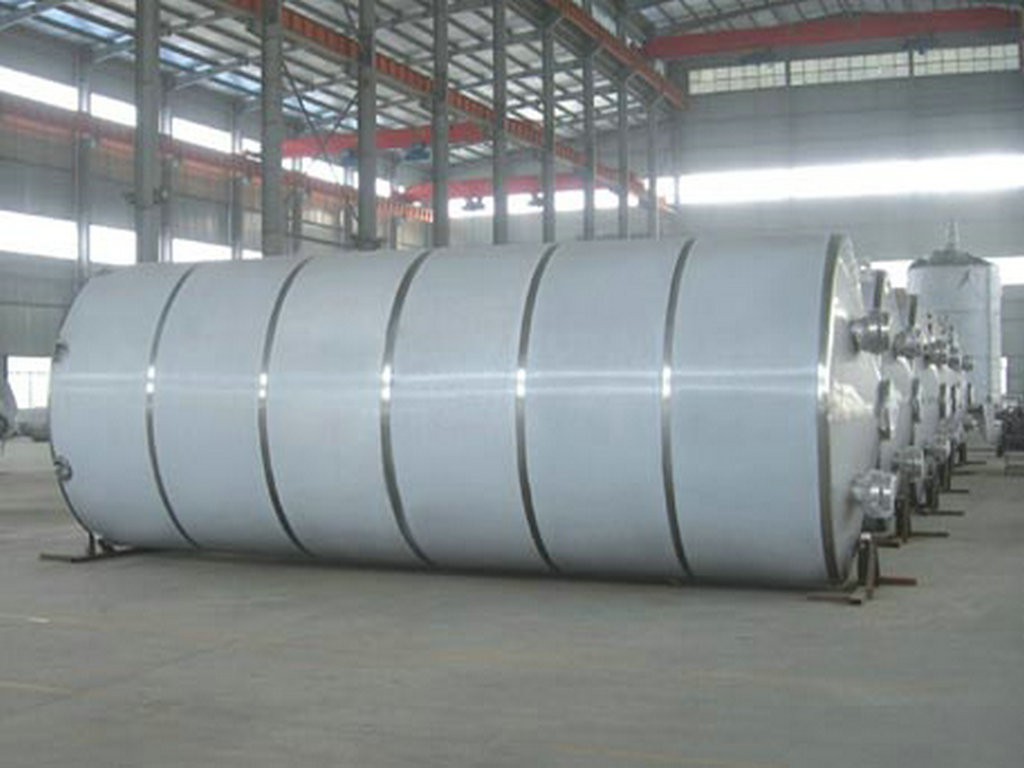
In the food industry, the selection of stainless steel storage tanks is a decision that combines technicality and strategy, directly impacting the stability of product quality, food safety compliance, and production operation efficiency. Thanks to its excellent corrosion resistance, chemical inertness, mechanical strength, and verifiable hygiene performance, stainless steel (especially the 304 and 316 grades) has become the preferred structural material in food processing and storage processes. However, relying solely on the material advantages is not sufficient to achieve the optimal application effect; a scientific and systematic selection process is necessary to fully realize its engineering value. This article examines the key selection factors of stainless steel food storage tanks from six dimensions, with the aim of providing rigorous and operational reference materials for related technical decisions.
Clarify process requirements and material characteristics
Based on the physicochemical properties (pH value, viscosity, fat/sugar content, heat sensitivity) of the target food category (such as dairy products, acidic beverages, vegetable oils, sauces, etc.), storage period, temperature requirements (room temperature, refrigeration, pasteurization or high-temperature storage), and production scale, precisely define the functional boundaries of the storage tanks. For example, high-chlorine environments or salty foods should preferably use 316 stainless steel; for the temporary storage stage before aseptic filling, the sealing level of the tank body and the risk of microbial retention need to be evaluated simultaneously.
Strict control of material grade and manufacturing quality
Food-grade stainless steel that complies with GB 4806.9-2016 "Food Contact Use Metal Materials and Products" and ASTM A240/A240M standards should be selected (304 or 316 is recommended; the latter is suitable for strong corrosive media). The surface roughness Ra value of the inner surface of the tank should be ≤ 0.8 μm (polished treatment is required), the welds must undergo argon protection full penetration welding and acid washing passivation treatment to ensure no burrs, no slag inclusions, no residual stress, and to eliminate the risks of microbial growth and cross-contamination.
Rational configuration of functional accessories and customized design
According to the requirements of the process chain, carefully integrate special devices such as insulation/cooling jackets, top-mounted or side-mounted mixing systems, online monitoring modules for liquid level and temperature, explosion-proof breathing valves, CIP/SIP interfaces, etc. The customized design should follow the regulations in ASME BPE-2022 "Biological Processing Equipment Standard" regarding hygienic structures, avoiding dead corners, grooves and non-self-draining areas, and ensuring that the entire system is verifiable for cleaning and sterilization.
Enhance maintainability and compatibility with cleaning validation
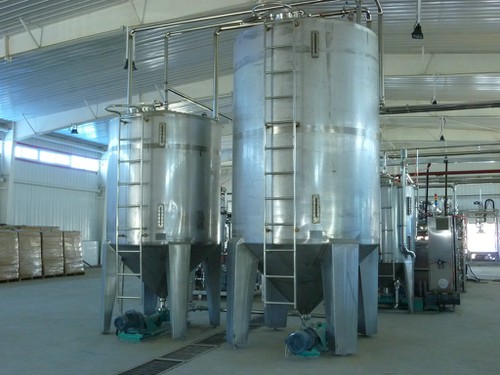
Opt for a structural design featuring fully open manholes, quick-release flange connections, visible sight glasses, and standardized CIP spray ball interfaces; the tank inclination angle should meet the requirements for self-emptying (≥1°), and the bottom drainage outlet must be equipped with a sterile diaphragm valve. All designs must support the validation of cleaning effectiveness (such as residue detection, ATP bioluminescence method), and retain complete records of cleaning parameters (time, temperature, flow rate, cleaning agent concentration).
Ensure compliance with regulations and traceability
The selected equipment must have complete compliance qualifications, including but not limited to: the production license for food contact products issued by the State Administration for Market Regulation, the compliance declaration issued by a third-party institution for FDA 21 CFR 178.3710/EC 1935/2004, and the "Food Industry Stainless Steel Containers" product certification issued by the China Light Industry Federation. The manufacturer should provide the material certificate (MTR), welding process assessment report (PQR), and the overall hygiene and safety assessment report of the equipment.
Leveraging the technical collaboration capabilities of professional suppliers
It is recommended to prioritize choosing suppliers that have obtained ISO 22000 food safety management system certification and possess project experience in the food industry (especially successful delivery cases of similar production lines). Their technical support should cover pre-process matching analysis, three-dimensional layout collaboration, GMP workshop installation guidance, FAT/SAT acceptance tests, and full life cycle maintenance services, ensuring seamless integration of the equipment with the existing production system.
In conclusion, the selection of stainless steel food storage tanks should not be limited to a single equipment purchase. Instead, it should be integrated into the overall process safety and quality assurance system of the food factory for comprehensive planning. Through a systematic selection strategy that starts from scientific needs, is based on regulatory standards, has verifiable hygiene as the bottom line, and is oriented towards the overall cycle efficiency, enterprises can truly enhance product safety, extend shelf life, reduce quality risks, and continuously strengthen their compliance competitiveness in the supply chain.