

Can a Tube In Tube Sterilizer be used for high - pressure sterilization?
Jul 08, 2026
As a supplier of Tube In Tube Sterilizers, I often encounter inquiries from customers about the suitability of our product for high - pressure sterilization. This topic is not only crucial for understanding the capabilities of our equipment but also for making informed decisions in various industries, such as food processing, pharmaceuticals, and biotechnology. In this blog, I will delve into the technical aspects of Tube In Tube Sterilizers and analyze whether they can be used for high - pressure sterilization.
Understanding Tube In Tube Sterilizers
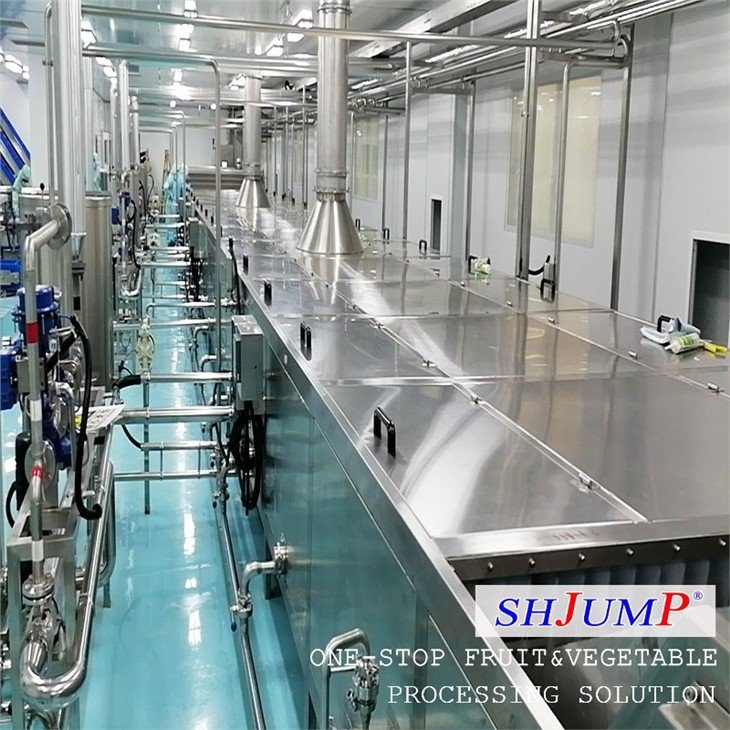
A Tube In Tube Sterilizer is a type of heat exchanger that consists of two concentric tubes. The inner tube carries the product to be sterilized, while the outer tube contains the heating or cooling medium. This design allows for efficient heat transfer between the product and the medium, ensuring rapid and uniform heating or cooling of the product.
The principle behind the Tube In Tube Sterilizer is based on the counter - current flow of the product and the heating/cooling medium. As the product flows through the inner tube and the medium flows through the outer tube in the opposite direction, heat is transferred from the medium to the product during the heating phase and from the product to the medium during the cooling phase. This counter - current flow maximizes the temperature difference between the two fluids, resulting in a more efficient heat transfer process.
High - Pressure Sterilization Requirements
High - pressure sterilization, also known as autoclaving, is a widely used method for eliminating microorganisms from various materials. It typically involves subjecting the product to high temperatures (usually above 121°C) and high pressures (usually around 15 psi or 103.4 kPa) for a specific period of time. The high temperature and pressure combination is effective in killing bacteria, viruses, fungi, and spores, ensuring the sterility of the product.
The key requirements for high - pressure sterilization include:
- Temperature control: The ability to reach and maintain the required high temperature throughout the sterilization process.
- Pressure resistance: The equipment must be able to withstand the high pressure generated during the sterilization process without any leakage or damage.
- Uniformity: The product should be uniformly heated and pressurized to ensure complete sterilization.
Can a Tube In Tube Sterilizer be Used for High - Pressure Sterilization?
Temperature Control
Tube In Tube Sterilizers are capable of achieving high temperatures required for sterilization. By using a suitable heating medium, such as steam or hot water, the product in the inner tube can be heated to the desired temperature. The counter - current flow design ensures efficient heat transfer, allowing for rapid heating of the product. However, maintaining a stable temperature during the entire sterilization process can be challenging. Fluctuations in the flow rate of the product or the heating medium, as well as variations in the ambient temperature, can affect the temperature control. To address this issue, advanced control systems can be installed in the Tube In Tube Sterilizer to monitor and adjust the temperature in real - time.

Pressure Resistance
One of the main concerns when using a Tube In Tube Sterilizer for high - pressure sterilization is its pressure resistance. The design of the Tube In Tube Sterilizer is primarily focused on heat transfer, and its pressure - bearing capacity may not be sufficient for high - pressure applications. The inner and outer tubes need to be made of materials with high strength and corrosion resistance to withstand the high pressure. Additionally, the joints and seals between the tubes must be carefully designed and tested to prevent any leakage. In some cases, additional reinforcement or modification of the Tube In Tube Sterilizer may be required to increase its pressure resistance.
Uniformity
Uniformity is another important factor in high - pressure sterilization. In a Tube In Tube Sterilizer, the product flows through the inner tube, and the heating or cooling medium flows through the outer tube. The design of the tubes and the flow pattern can affect the uniformity of the heat transfer and the pressure distribution. If the product is not uniformly heated or pressurized, some areas may not reach the required temperature and pressure for sterilization, leading to incomplete sterilization. To improve the uniformity, the design of the Tube In Tube Sterilizer can be optimized, such as by using baffles or turbulence promoters in the tubes to enhance the mixing of the product and the medium.
Advantages and Disadvantages of Using a Tube In Tube Sterilizer for High - Pressure Sterilization
Advantages
- Efficient heat transfer: The counter - current flow design of the Tube In Tube Sterilizer allows for efficient heat transfer, which can reduce the sterilization time and energy consumption.
- Flexibility: Tube In Tube Sterilizers can be easily customized to meet the specific requirements of different products and applications. They can be used for a wide range of products, including liquids, slurries, and semi - solids.
- Compact design: Compared to other types of high - pressure sterilization equipment, Tube In Tube Sterilizers have a relatively compact design, which can save space in the production facility.
Disadvantages
- Limited pressure resistance: As mentioned earlier, the pressure - bearing capacity of a standard Tube In Tube Sterilizer may not be sufficient for high - pressure applications. Additional modification or reinforcement may be required.
- Complexity: The design and operation of a Tube In Tube Sterilizer can be relatively complex, especially when it comes to temperature and pressure control. Skilled operators are required to ensure the proper functioning of the equipment.
- Cost: The cost of a Tube In Tube Sterilizer, especially one that is modified for high - pressure sterilization, can be relatively high compared to other types of sterilization equipment.
Alternative Sterilization Equipment
If a Tube In Tube Sterilizer is not suitable for high - pressure sterilization, there are several alternative options available.
- Water Immersion Pasteurizer: This type of equipment uses water as the heating medium to pasteurize the product. It is suitable for products that do not require high - pressure sterilization and can be used for a variety of food and beverage products.
- UHT Tubular Sterilizer: UHT (Ultra - High - Temperature) tubular sterilizers are designed to sterilize products at very high temperatures (usually above 135°C) for a short period of time. They are commonly used in the dairy and beverage industries to produce long - shelf - life products.
- Water Spray Retort Autoclave: This is a type of high - pressure sterilization equipment that uses water spray to heat and pressurize the product. It is suitable for products that require high - pressure sterilization and can be used for a variety of food and pharmaceutical products.
Conclusion
In conclusion, while a Tube In Tube Sterilizer has the potential to be used for high - pressure sterilization, it faces several challenges in terms of temperature control, pressure resistance, and uniformity. Whether it can be used for high - pressure sterilization depends on the specific requirements of the application and the modifications made to the equipment.
If you are considering using a Tube In Tube Sterilizer for high - pressure sterilization, it is important to consult with a professional to evaluate the suitability of the equipment and to ensure that it meets the necessary standards and regulations. Our company, as a leading supplier of Tube In Tube Sterilizers, is committed to providing high - quality products and professional technical support. If you have any questions or are interested in purchasing our products, please feel free to contact us for further discussion and negotiation.
References
- Heldman, D. R., & Hartel, R. W. (1997). Principles of Food Processing. Aspen Publishers.
- Peleg, M., & Corradini, M. G. (2011). Modeling of Food Processing Operations. Springer.
- Singh, R. P., & Heldman, D. R. (2014). Introduction to Food Engineering. Academic Press.