Double-stage pulping machine — The Industry Benchmark for Fruit and Vegetable Pulp–Residue Separation.
Sep 14, 2026
Italian conical screen technology · Juice yield increased by 2%–3% · Full SUS304 food-grade stainless steel
Product Overview

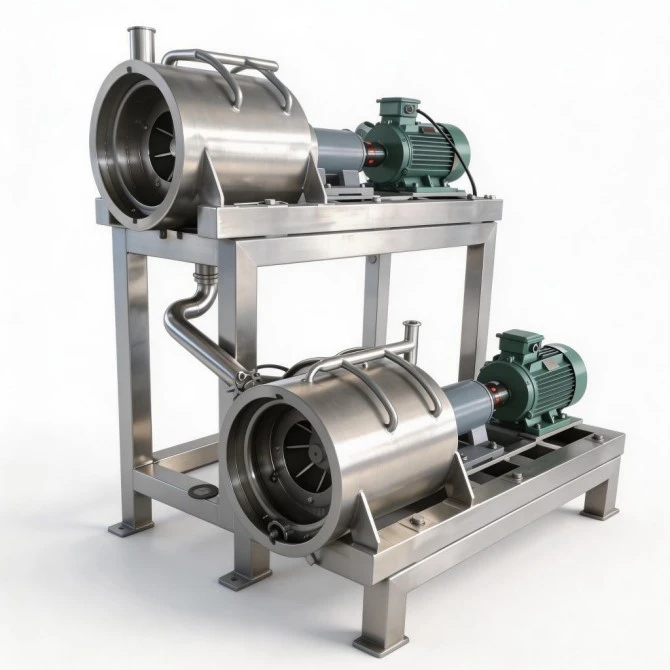
The Double-stage pulping machine (also known as a pulping and refining machine) is a new type of equipment developed by Shanghai Japa Machinery Technology Co., Ltd. through technical innovation and product upgrades based on imported Italian technology. Specifically designed for fruit and vegetable juice and jam production lines-handling produce such as tomatoes, kiwifruit, strawberries, mangoes, apples, and hawthorn-this machine features a rational structure, stable performance, high juice yield, and ease of installation and operation. Its design complies with national food hygiene standards, and both its processing technology and product quality rank at the forefront of the domestic industry.
Core Technical Advantages of Double-stage pulping machine
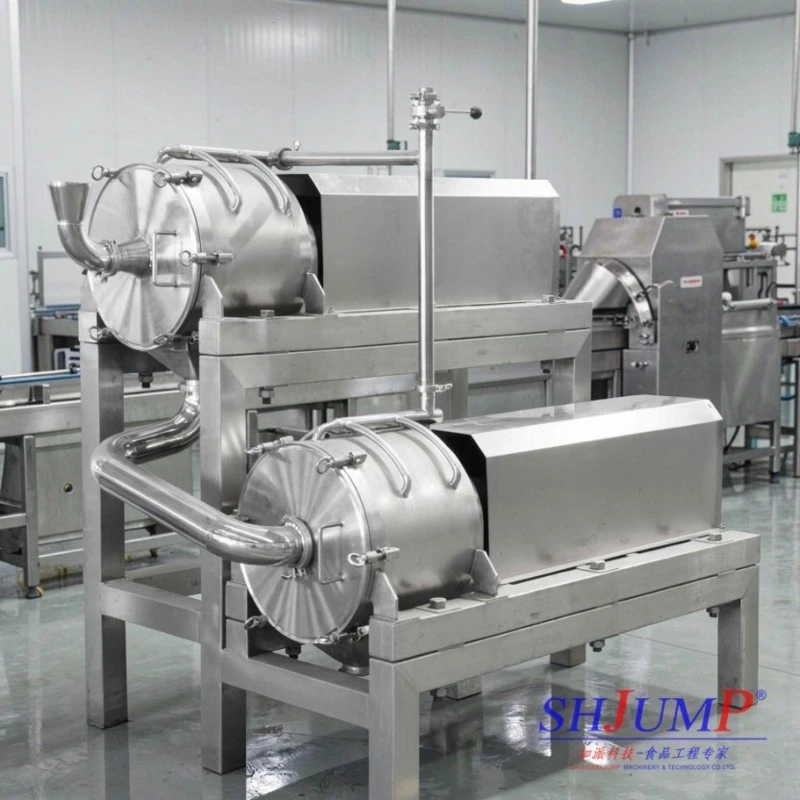
Dual-Stage Design-The first stage uses a coarse screen to separate skins and seeds, while the second stage uses a fine screen to refine the pulp; this results in a higher pulp yield and a smoother texture.
Italian Conical Screen-A unique conical screen structure effectively increases raw juice yield by 2%–3%, delivering remarkable results.
All-SUS304 Stainless Steel-All product-contact parts are made of food-grade stainless steel; the unit is corrosion-resistant, easy to clean, and compliant with food safety and hygiene standards.
Variable Frequency Speed Control-Rotational speed can be steplessly adjusted based on material characteristics to achieve optimal pulping results and gentle processing.
Professional Dynamic Balancing-The machine operates smoothly with low noise, is easy to maintain, and offers a long service life.
Independent Dual-Motor Drive-Separate motors for the first and second stages ensure ample power, stability, reliability, and guaranteed production capacity.
Automatic Pulp-Residue Separation-Pulp is automatically separated from skins and seeds; the unit can be integrated into a production line or operated as a standalone machine.
CIP In-Line Cleaning-Optional CIP cleaning piping allows for convenient, rapid cleaning without disassembly, ensuring food hygiene.
Working Principle
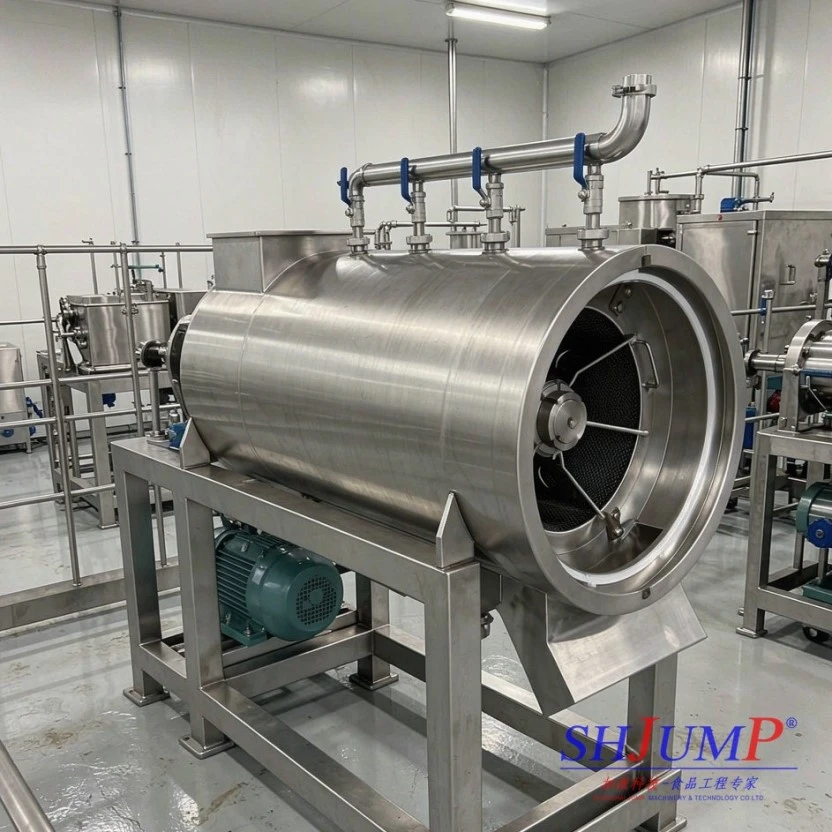
An electric motor drives the rotation of scrapers mounted on the main shaft at high speed via a coupling. After pre-crushed fruit enters the machine through the inlet, a pulp-distribution disc evenly spreads the material between the scrapers and the screen. Driven by the rotating scrapers and the lead angle, the material moves spirally along the cylinder toward the discharge end while being pulped by centrifugal force. The juice and pulp (now in a pulpy state) pass through the screen perforations to the next processing stage, while skins, seeds, and other residues are discharged through the waste outlet, achieving automatic separation of pulp and residue.
The Double-stage pulping machine repeats this process in two linked stages: the first stage employs a screen with larger apertures (e.g., 1.2–2.0 mm) for coarse pulping and the separation of large skin and seed fragments, while the second stage uses a finer screen (e.g., 0.5–1.0 mm) for refining, resulting in a smoother pulp texture. When used in tandem, these two stages significantly increase juice yield and ensure more thorough residue discharge.
Technical Specifications
The dual-stage pulper is available in three standard capacity specifications to meet production needs of various scales:
|
Model |
Production Capacity (kg/h) |
First Screen Mesh (mm) |
Second Screen Mesh (mm) |
Working Speed (RPM) |
Motor Power |
Dimensions (mm) |
Material |
|
3 t/h |
3,000 |
1.2~2.0 (customizable) |
0.5~1.0 (customizable) |
1,450 |
7.5kW + 7.5kW |
1450×1080×1400 |
SUS304 |
|
5 t/h |
5,000 |
1.2~2.0 (customizable) |
0.5~0.8 (customizable) |
1,450 |
11kW + 11kW |
1800×1220×1540 |
SUS304 |
|
10 t/h |
10,000 |
1.2~2.0 (customizable) |
0.5~0.8 (customizable) |
1,450 |
15kW + 15kW |
2188×1300×1737 |
SUS304 |
The above specifications represent the standard configuration; however, screen aperture, equipment materials, and production capacity can be customized based on the specific characteristics of the customer's materials and process requirements.
Applicable Materials
The double-stage pulping machine is suitable for pulping, peeling, de-seeding, and separating pulp from residue for the following types of fruits and vegetables:
Berries: Tomatoes, goji berries, sea buckthorn, blueberries, strawberries, raspberries.
Fruits: Kiwifruit, mangoes, apples, peaches, apricots, plums, hawthorn, pineapples.
Melons and vegetables: Pumpkins, carrots, chili peppers.
Others: Grapes, pomegranates, Cherokee roses (Rosa roxburghii), citrus fruits, jujubes.
Application Scenarios
Scenario 1: Tomato Paste Processing Line
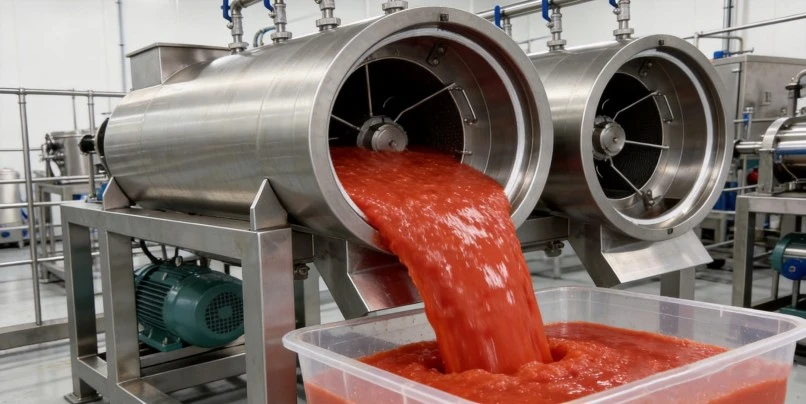
In large-scale tomato paste processing facilities, the dual-stage pulper integrates seamlessly with upstream crushing and pre-heating systems and downstream refining systems. Tomatoes that have undergone crushing and pre-heating are pumped into the pulper's inlet; the first stage (coarse screen) rapidly separates skins and seeds, while the second stage (fine screen) refines the pulp into a smooth, high-quality tomato puree. This process significantly boosts juice yield and ensures the discharged skin and seed residue is dry and clean. The machine operates in coordination with the production line's control cabinet, featuring variable frequency speed control that allows for flexible adjustments based on tomato variety and ripeness.
Brand Strength
Shanghai Japai Machinery Technology Co., Ltd. is a Chinese expert in food engineering, specializing in the design, manufacturing, and turnkey project delivery of complete plant equipment for concentrated fruit juice and jam, tropical fruit processing, and hot-fill juice beverages.
The company's key engineers and core R&D personnel possess over 40 years of experience in the food machinery industry. We maintain long-term collaborations with prestigious research institutions-such as the National Fruit Research Institute of the Chinese Academy of Agricultural Sciences, Huazhong Agricultural University, and Jiangnan University-and have established stable technical partnerships with renowned international companies like FBR, Ing. Rossi, Bertuzzi, and CFT (Italy).
Our products are exported to markets across Southeast Asia, the Middle East, Africa, South America, and Europe; to date, we have successfully installed over 70 production lines worldwide for tomato paste, apple juice concentrate, and hot-fill juice.