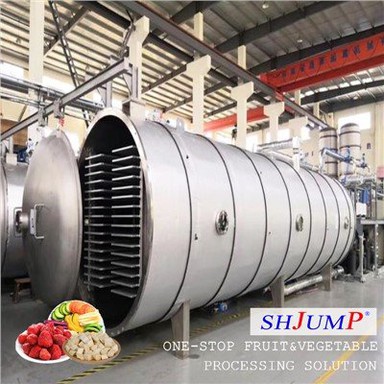
Advantages and Operating Principle of a Dried Mango Processing Line
Oct 19, 2026
What is Dried Mango Processing Line
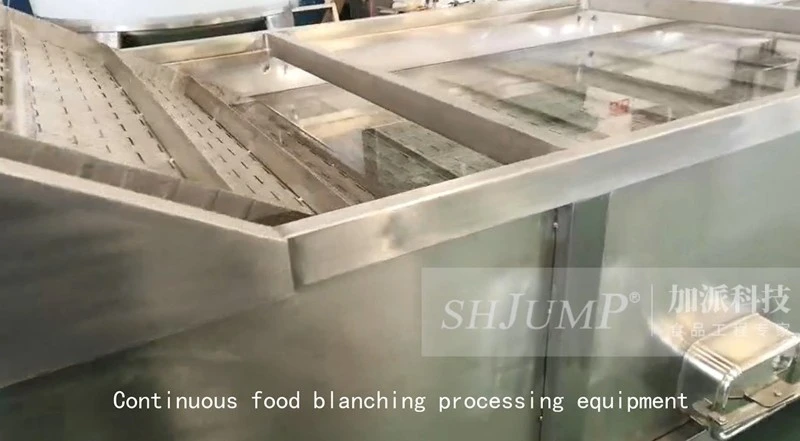
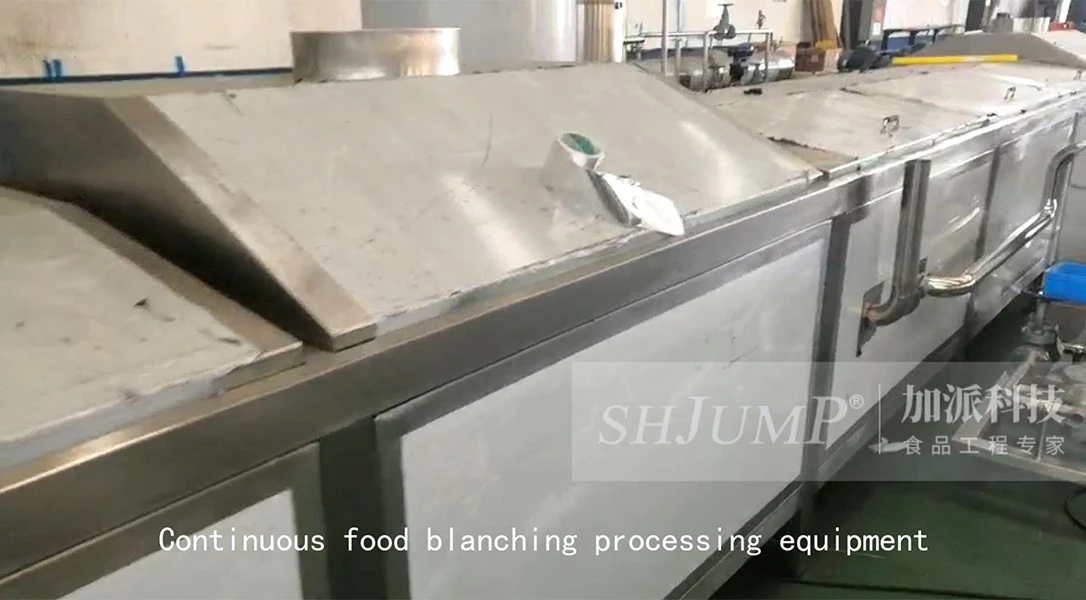
The Dried Mango Processing Line (also known as a mango blanching and color-retention tunnel, or a continuous multi-functional blanching and color-retention machine) serves as a critical pre-treatment unit in the production of candied or dried mango. It is positioned after the peeling and slicing stage and prior to the sugar-infusion and firming stage. Designed for facilities producing dried mango, candied mango, quick-frozen mango, or freeze-dried mango snacks, this equipment addresses key industry challenges-specifically enzymatic browning, oxidative darkening, loss of structural integrity (mushiness), and the difficulty of finding alternatives to sulfur fumigation. Because mangoes are rich in polyphenol oxidase, failure to promptly inactivate these enzymes after slicing leads to rapid browning and blackening within minutes, which severely compromises the color and market appeal of the final product.
Constructed entirely from food-grade SUS304 stainless steel, the system is designed for seamless integration with upstream peeling and slicing equipment, as well as downstream sugar-infusion and drying units, enabling a continuous, large-scale production process from fresh mangoes to finished dried products.
Adapted Bill of Materials (BOM) for Processing
General-purpose materials (can be processed directly with standard configuration):
- Fruits: Fresh fruits-such as mangoes, pineapples, peaches, apples, pears, and bananas-that require slicing followed by blanching for color retention.
- Vegetables: Root and tuber vegetables-such as carrots, potatoes, bamboo shoots, and yams-that require slicing and color-retention treatment.
- Specialized/Customized materials (specifically for dried mango production):
- Fresh mango slices (10–15 mm thick; peeled and pitted mango flesh)-this machine is specifically designed for dried mango production lines.
- Highly ripened mangoes (80–90% ripe)-features a custom mesh-belt hold-down mechanism to prevent damage to the soft, delicate fruit flesh.
- Mango strips/diced mango-customizable material-infeed guidance structures available.
The machine's structural parameters-including the roller conveyor system, infeed guides, spray pressure, and blanching duration-can be customized based on the specific types of fruits or vegetables being processed, allowing for flexible switching between different products.
Operating Principle of the Complete Unit
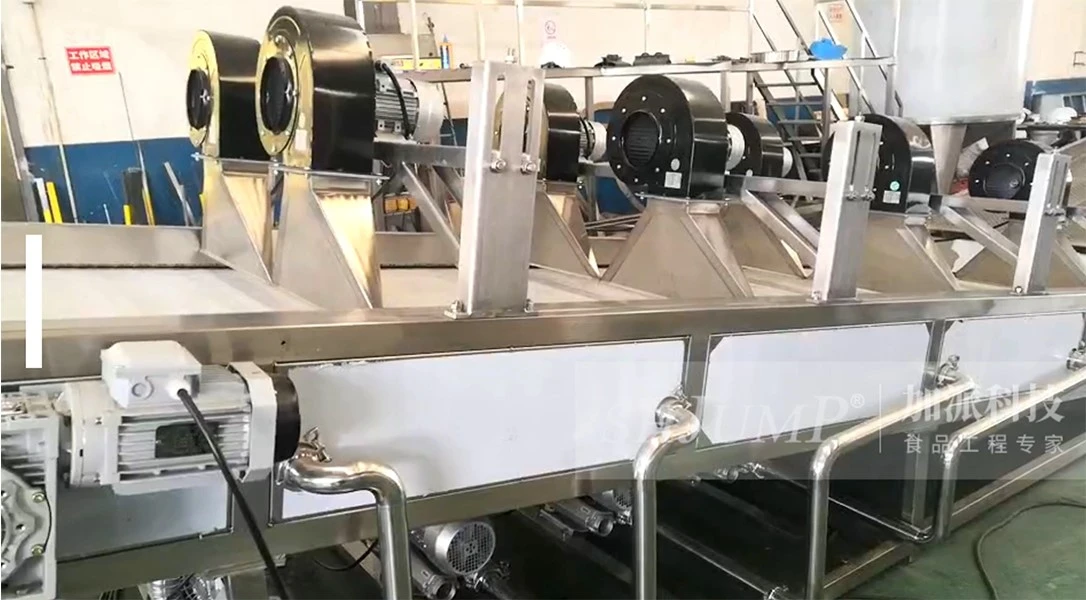
The dried mango processing line operates as a continuous production system, following this sequence: infeed → steam or hot-water enzyme inactivation and color retention → cooling → final product discharge.
- Infeed: Peeled and sliced mangoes (10–15 mm thick) are fed continuously-either manually or via a slat conveyor-into the inlet of the steam tunnel.
- Core Processing: As the mango slices enter the steam tunnel, they are subjected to steam, which ensures rapid and uniform enzyme inactivation and color retention. A plate-type heat exchange system precisely regulates the blanching temperature, deactivating polyphenol oxidase and peroxidase on the surface of the mango slices. This effectively halts enzymatic browning at the source while softening the fruit tissue, which facilitates the subsequent penetration of sugar syrup. Both blanching time and temperature are controlled through a combination of the variable-frequency drive (VFD) speed of the conveyor belt and a steam proportioning control valve.
- Cooling Phase: After blanching, the mango slices enter the cooling section, where they are rapidly brought down to ambient temperature via water sprays. This prevents residual heat from causing over-ripening or softening, while effectively preserving the mango's natural, vibrant yellow color.
- Discharge: The cooled mango slices are continuously discharged from the unit and proceed directly to the next stage: firming, color retention, and vacuum sugar infusion.
In a dried mango processing line, the blanching unit plays a critical role in enzyme inactivation and color preservation. By subjecting mango slices to blanching, oxidative enzyme activity is effectively inhibited, preventing enzymatic browning during subsequent sugar infusion and drying stages. This ensures the final dried product boasts a vibrant, golden-yellow color and a consistent, appealing appearance.
Standardized Technical Parameter Table
|
Parameter Item |
Standard Configuration |
|
Nominal Processing Capacity |
0.5 ~ 2 tons/hour (customizable) |
|
Applicable Materials |
Mango slices (10~15mm thickness) / fruit strips / fruit dices |
|
Machine Construction Material |
SUS304 food-grade stainless steel |
|
Total Rated Power of Matched Motors |
5 ~ 10 kW (subject to machine model) |
|
Power Supply |
380V / 50Hz, 3-phase 5-wire |
|
Overall Machine Dimensions |
Customized based on capacity (example: 4500×800×1200mm) |
|
Control System |
PLC automatic control / variable frequency speed regulation; temperature & time adjustable |
|
Heating Method |
Steam heating (plate heat exchange system) |
|
Blanching Temperature |
Ambient ~ 95°C adjustable (typical 65°C for mango enzyme inactivation) |
|
Discharge Temperature |
30~40°C (with built-in cooling system) |
|
Safety Protection |
Overload, short-circuit & phase-loss protection; steam safety valve assembly |
|
Cleaning Method |
Equipped with standard CIP spray piping |
|
Supporting Water & Steam Requirements |
Steam (pressure: 6~8kg/cm²); circulating water supply |
*Parameters are compiled based on the contract proposal and commercial budget for the Jump dried mango line.*
Dried Mango Processing Line Integration and Adaptation Solutions
Upstream interfacing/supporting standalone equipment:
- Bubble-type washing machine → Brush-and-spray washing machine → Transition/elevating spray washer → Peeling, de-coring, and slicing station → Steam tunnel blanching and color-retention machine
Downstream processing equipment:
- Hardening/color-retention immersion unit (continuous) → Vacuum sugar-infusion tank → Sugar-rinsing unit → Vibratory dewatering unit → Tray loading → Hot-air circulation drying chamber
List of items that can be integrated into the complete production line:
- Mango Dried/Preserved Fruit Processing Line (0.5–3 t/h): Washing → Peeling & Slicing → Blanching (for color retention) → Firming → Vacuum Sugar Infusion → Rinsing → Draining → Drying → Packaging
- Freeze-Dried Mango Processing Line: Washing → Peeling & Slicing → Blanching (for enzyme inactivation) → Vacuum Freeze-Drying
- IQF (Individually Quick Frozen) Mango Dicing Line: Washing → Peeling → Dicing → Blanching (for color retention) → Quick Freezing
- Mixed Fruit/Vegetable Drying Line: Utilizes a shared blanching/color-retention tunnel for mango and pineapple, with adjustable settings for different products and processing parameters
Selection Guidance by Scenario
① Small-scale startup dried fruit processing plant (0.5 tons/hour)
We recommend a 0.5 t/h steam-based blanching and color-retention machine (estimated price: ~237,000 RMB; includes CIP piping and a plate heat exchanger). When paired with a bubble-type washing machine, a slicer, and a drying chamber, this setup enables a rapid transition to mass production.
② Medium-Scale Standardized Dried Fruit Production Plant (1.5–2 tons/hour)
It is recommended to use a 1.5–2 t/h steam tunnel blanching and color-retention machine, featuring plate-type heat exchange and PLC-integrated control. This unit should be connected to a multi-layer conveyor system-equipped for peeling and slicing-and a vacuum sugar-infusion system to enable continuous, large-scale production.
③ Large-scale, fully automated, export-grade processing plant (capacity: 3 tons/hour or more)
We recommend a combined system featuring a multi-stage steam tunnel and a low-temperature cooling unit. The system is fully integrated via PLC, supports 24-hour continuous production, and complies with export food hygiene certification standards and HACCP system requirements.
Customized solutions for special operating conditions:
Highly mature/soft fruit (90% ripeness or above): Features a custom mesh-belt pressing mechanism designed to prevent damage to the fruit flesh.
Multi-product handling (compatible with both mangoes and pineapples): Equipped with custom, quick-change infeed guides and a parameter memory function.
Water-scarce regions: Includes an enhanced circulating water filtration system, optimized for water conservation.


Would you like to learn more? Contact us today to receive a comprehensive equipment list, transparent pricing, and a complimentary bilingual (Chinese-English) process flow chart-designed to help your technical team clearly plan this high-performance production line!
WeChat: 13310056502
WhatsApp: +86 13310056502
Email: perk@sinojump.com